
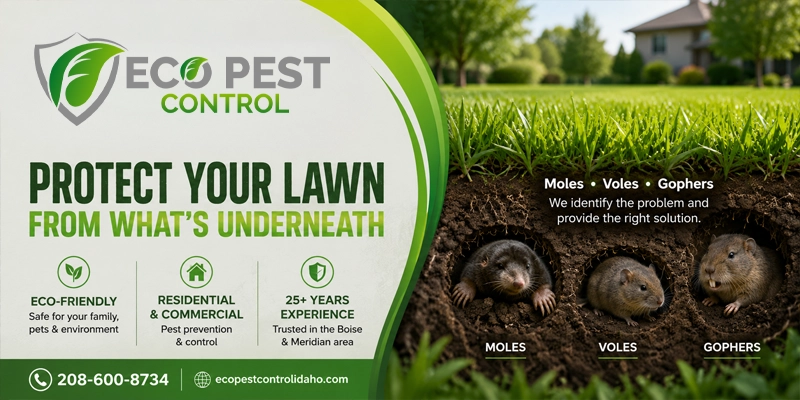
A beautiful lawn doesn't just face threats from weeds and drought. Some of the most destructive pests are working underground, often long before you notice the damage. Moles, voles, and gophers are all common throughout the Boise and Meridian area, but they behave very differently and require different control strategies.
Knowing which pest you're dealing with can help you respond more effectively and prevent extensive damage to your lawn, landscaping, gardens, and irrigation systems.
Moles vs. Voles vs. Gophers: What's the Difference?
Although they're often confused, these three animals have different diets, tunnel systems, and signs of activity.
Moles
Moles are insect-eating mammals that spend nearly all of their lives underground. Rather than feeding on plants, they tunnel through the soil searching for earthworms, grubs, and other insects.
Signs of mole activity include:
- Raised surface tunnels or ridges
- Small volcano-shaped soil mounds
- Soft, spongy areas beneath the lawn
While moles don't typically eat your grass, their tunnels can damage root systems, loosen soil, and create an uneven lawn.
Voles
Voles, sometimes called meadow mice, are small rodents that feed on grasses, roots, bulbs, bark, and other vegetation. Unlike moles, voles often travel through existing mole tunnels while also creating shallow runways above ground beneath mulch, vegetation, or tall grass.
Signs of vole activity include:
- Narrow surface runways through grass
- Small entrance holes without large soil mounds
- Gnawed tree bark near the ground
- Damaged flower bulbs and garden plants
Voles can cause significant damage to young trees and shrubs by chewing on bark near ground level. Their feeding can also damage gardens, flower beds, and landscaped areas.
Gophers
Pocket gophers are larger burrowing rodents that feed primarily on roots, bulbs, and other underground plant material. Their extensive tunnel systems can damage lawns, landscaping, irrigation lines, and other underground areas of a property.
Signs of gopher activity include:
- Large fan-shaped or crescent-shaped dirt mounds
- Plugged tunnel entrances
- Wilting plants caused by root damage
- Missing bulbs and underground vegetation
Because gophers actively feed on plant roots, they can cause more direct damage to ornamental plants, gardens, and landscaping than moles.
Why Moles, Voles, and Gophers Thrive in the Boise Area
Boise and Meridian landscaping can create favorable conditions for burrowing pests. Irrigated lawns, gardens, landscaped beds, and healthy vegetation can provide food, moisture, and easy-to-work soil.
Several factors can contribute to increased underground pest activity:
- Irrigated lawns can keep soil softer and easier to tunnel through.
- Landscaped yards provide vegetation and potential food sources.
- Gardens provide roots, bulbs, vegetables, and other attractive plant material.
- Protected underground tunnels allow pests to remain hidden from predators and people.
Properties with healthy lawns and regular watering can sometimes unintentionally become attractive habitats for moles, voles, and gophers.
Signs You May Have an Underground Pest Problem
Because these pests spend much of their time below the surface, homeowners often notice property damage before they ever see the animal responsible.
Watch for signs such as:
- Fresh dirt mounds
- Raised tunnels across the lawn
- Dead or thinning patches of grass
- Wilting plants despite adequate watering
- Gnawed bark on trees and shrubs
- Damage to bulbs, vegetables, or landscape plants
- Soft or uneven areas when walking across the lawn
The sooner you identify the type of pest causing the problem, the easier it may be to prevent additional lawn and landscape damage.
How to Protect Your Lawn from Burrowing Pests
Complete prevention isn't always possible, but several property-maintenance practices may help make your lawn and landscaping less attractive to underground pests.
Helpful strategies include:
- Inspect your lawn regularly for new tunnels, runways, or soil mounds.
- Maintain proper drainage and avoid excessive watering.
- Keep mulch and ground cover from becoming excessively dense.
- Consider wire mesh barriers around gardens and vulnerable plants.
- Address grub populations that may provide a food source for moles.
- Remove fallen fruit and other accessible food sources that may attract rodents.
Professional pest identification can be especially important because a control method that works for one burrowing pest may not be effective for another.
Mole, Vole, and Gopher Control in Boise & Meridian
Trying to determine whether you're dealing with a mole, vole, or gopher based solely on lawn damage can be difficult. The shape of the tunnels, location of the damage, soil mounds, feeding activity, and other signs can help identify the animal responsible.
Eco Pest Control provides pest treatment, prevention, and exclusion services for homes and businesses throughout Boise, Meridian, and surrounding Idaho communities. With more than 25 years of pest control experience, our team can inspect the affected property, identify the source of the problem, and recommend an appropriate treatment strategy.
Learn more about Eco Pest Control and our Boise-area pest control services.
Protect Your Boise Lawn Before the Damage Gets Worse
Underground pest activity can continue expanding when the source of the problem isn't addressed. Over time, tunnels and feeding activity may cause increasing damage to lawns, gardens, landscaping, plant roots, and irrigation areas.
If you've noticed fresh mounds, raised tunnels, damaged plants, or unexplained lawn damage, a professional pest control company serving Boise and Meridian can help determine exactly what's happening beneath the surface and recommend an effective solution.
Contact Eco Pest Control – Boise & Meridian, ID
If moles, voles, or gophers are damaging your Boise or Meridian-area lawn, contact Eco Pest Control for an inspection and customized treatment plan.
Call 208-600-8734 or contact us online today.