

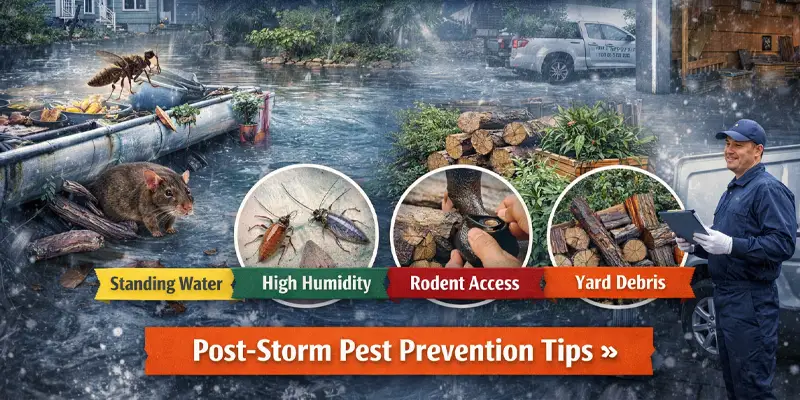
Heavy rainstorms and flooding may bring soggy lawns and wet basements, but they also create the perfect environment for pest infestations. Insects and rodents are drawn to water, along with shelter and food. You can reduce the chance of pests taking up residence in your Meridian home after a rainstorm with these tips.
Weather Events: Why Do They Pose Pest Problems?
It’s important to know what to look for after a rainstorm and how to act quickly to prevent minor problems from blossoming into major ones. Did you know?
- Standing water attracts mosquitoes.
- High humidity draws ants, cockroaches, and silverfish indoors.
- Flooded or saturated soil pushes rodents and wildlife into dry areas (AKA your home).
- Damaged landscaping and compromised building exteriors offer access points.
Comprehensive Inspections
It all starts with a thorough inspection from your trusted pest control provider in Boise. You can do a cursory one on your own after floodwaters recede or heavy rain stops:
- Check for standing water in gutters, flowerpots, and low-lying areas around your property.
- Check for and seal entry points such as cracks in foundations, gaps in siding, broken screens, and under doors.
- Look for signs of pest activity, such as droppings, chewed materials, or insect clusters near damp areas.
- Inspect attics and basements for moisture accumulation, which is where pests like to hang out.
Eliminate Standing Water Immediately
Standing water attracts pests of all kinds, particularly mosquitoes. Did you know these annoying pests can breed in as little as a tablespoon of water? After rain or flood:
- Drain or dump water from containers such as buckets, planters, and tarps.
- Make sure there are no clogs in your gutters and downspouts, and that water is directed away from the foundation.
- Level out low spots in your yard where water can collect.
- Fix or replace leaky hoses, spigots, and irrigation systems.
Repair and Seal Your Home
Water invites pests. Make immediate repairs if you see:
- Foundation cracks
- Leaky rooflines
- Window and door gaps
- Damaged siding
- Vents without screens
Pro tip: Install door sweeps, weatherstripping, and window screens to reduce pest access, and seal small openings to prevent small critters from squeezing inside.
Manage Landscape and Yard Debris
Flooded yards can collect fallen branches, soggy mulch, and organic debris – all ideal hiding spots for pests such as termites and earwigs. After a storm, be sure to:
- Rake up and dispose of debris
- Cut back overgrown bushes and tree limbs
- Keep mulch levels shallow and away from house foundations
Dry and Dehumidify Indoor Spaces
It’s important to control indoor moisture levels after flooding through the use of dehumidifiers, wet vacs, and fans. Use moisture meters to determine problem areas. Even small amounts of dampness are a magnet to silverfish and rodents.
Call a Professional
It’s wise to hire your trusted pest control technician in Meridian to perform:
- Post-storm pest assessments
- Customized prevention plans
- Rapid response treatments
Rainstorms and flooding are an inevitable part of Idaho’s ever-evolving weather patterns. That doesn’t mean you have to deal with pest infestations. Quick action paired with regular inspections can nip these problems in the bud so you aren’t left with an infestation.
Contact Eco Pest Control
Schedule your post-storm pest inspection today and keep pests at bay when you contact us at 208-600-8734.